
Brain Test: Tricky Puzzles review
 Analysis by GetAllApps
Brain Test: Tricky Puzzles is the kind of brain teaser game that asks you to slow down, look again, and question the first answer that comes to mind. Its promise is simple: funny, tricky puzzles designed to test your IQ. That playful idea sets the mood from the start, and it gives the game a clear identity among mobile trivia titles. Rather than treating every question like a school test, it invites you to approach each one with curiosity and a bit of humor.
Made by Unico Studio, Brain Test: Tricky Puzzles is free to play and rated for everyone. It has built a substantial audience, with over 100 million installs and an average rating of 4.7 from around 10 million ratings. Those figures suggest broad appeal, but the more important question is whether the experience feels enjoyable once you are actually puzzling through it. For me, the central attraction is the contrast between its approachable presentation and the mental sidesteps it expects from players.
A playful first impression
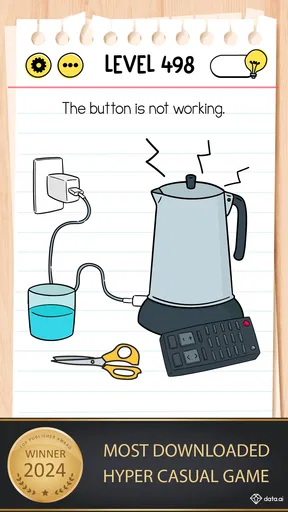
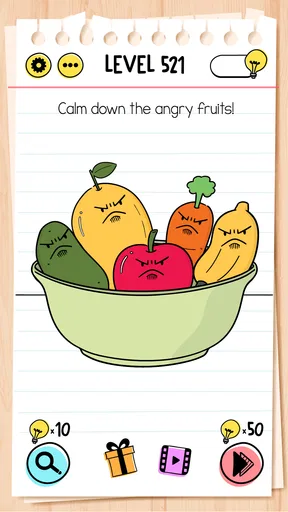
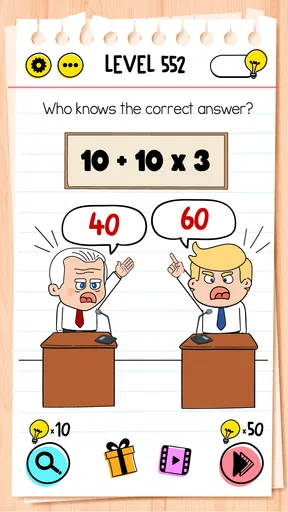
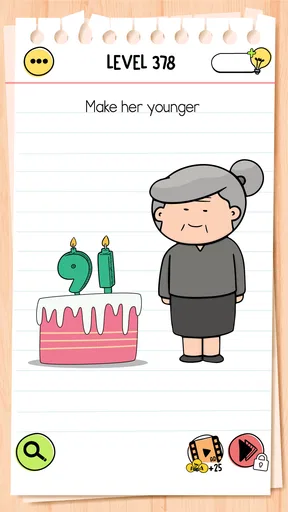
The game’s first impression is deliberately light. The name tells you to expect puzzles, while the tagline leans into comedy and misdirection. That combination matters: it signals that the goal is not just to recall facts, but to interpret what is in front of you in an unconventional way. A question that looks straightforward may be asking you to notice a detail, reconsider the wording, or abandon a familiar assumption. The fun comes from discovering that the obvious route is not always the intended one.
This makes the game easy to understand without making every challenge feel automatic. You can arrive expecting a casual diversion and still find yourself pausing over a puzzle, testing a thought, and revising your answer. I like that the concept doesn’t need an elaborate premise to make its point. The puzzles themselves are the focus, and the promise of a clever twist gives each new challenge a small sense of anticipation.
As a trivia game, it sits in a slightly different lane from quizzes built around memorized facts. The emphasis is on reasoning and perception rather than simply knowing an answer in advance. That distinction gives it a broader, more welcoming feel: you do not need to arrive with specialist knowledge to take part. Instead, you need patience, attention, and a willingness to entertain an answer that might initially seem silly.
Humor as an invitation
The funny side of the concept is more than decoration. Humor lowers the pressure that can come with a puzzle game, where getting stuck might otherwise feel like failing a test. Here, a wrong guess can be part of the joke, and an unexpected solution can make the moment feel satisfying rather than stern. That tone helps the game invite experimentation. I found the idea of treating a puzzle as a playful conversation more appealing than being told to solve it in one rigid, serious way.
That lightness also makes the experience suitable for a wide audience. The content rating is Everyone, and the core premise is easy to explain to someone who has never played a mobile brain teaser. You can describe it in a sentence: look carefully, think creatively, and don’t trust your first instinct too much. That simplicity is a strength, especially for a game meant to be picked up for a short mental break.
A visual language built around curiosity
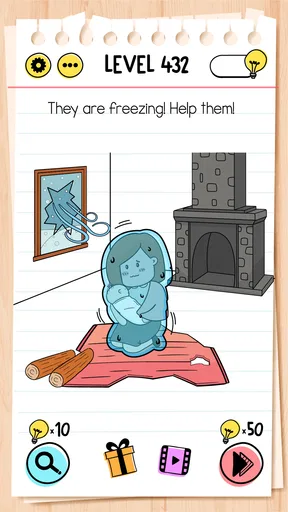
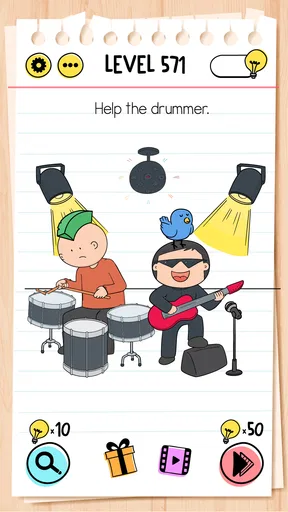
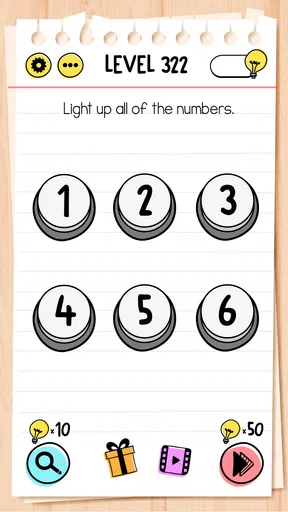
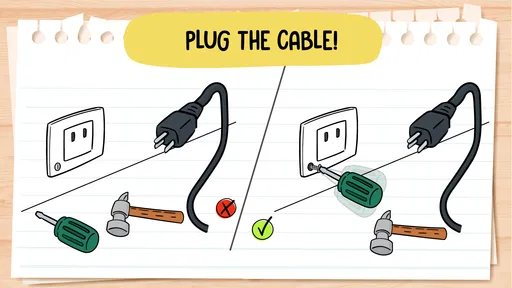
Art direction in a puzzle game has a practical job: it needs to make the challenge readable while keeping the screen inviting. The overall concept here supports that balance. A puzzle should feel like something you can inspect, not a wall of information that makes you hesitate before you even begin. The game’s playful framing encourages that closer look, turning the act of examining a question into part of the entertainment.
Its setting is best understood through the situations presented by the puzzles rather than through a grand fictional world. That keeps attention on the task at hand. Instead of asking you to follow an elaborate plot, the game centers the small, self-contained moment of trying to work out what a puzzle is really asking. I think that is a sensible choice for this kind of experience: the setting serves the challenge, and the challenge provides the reason to keep going.
The visual mood implied by the game’s comic identity helps distinguish it from more formal brain-training products. The tone says that cleverness can be playful, and that an answer can surprise you without needing to be presented as a serious intellectual achievement. That is a useful emotional cue. It encourages the player to inspect details without turning every puzzle into a performance test.
Keeping the screen approachable
Good puzzle presentation is not only about decoration. If a game wants you to question what you see, it needs to make the act of looking feel worthwhile. Brain Test’s central idea naturally points in that direction: the screen is not merely a place to read a prompt, but a space where you should pay attention and reconsider your assumptions. That focus gives the visual side a clear purpose even when the game’s larger world is not the main attraction.
I also appreciate that the playful mood does not depend on a complicated backstory. The puzzles can carry their own little moments, and the game can move from one mental challenge to the next without asking you to keep track of a lengthy narrative. For players who want an easy entry point, that’s a practical advantage. You can focus on the current riddle and enjoy the moment of recognition when a tricky idea finally clicks.
Sound and the rhythm of solving
Sound in a puzzle game should support concentration without competing with it. The overall tone of Brain Test points toward a relaxed, comic experience, and that is a good fit for challenges that ask you to think carefully. The game’s mood works best when it leaves room for the player to pause, reconsider, and enjoy the small surprise of a solution. In that sense, sound and visual style are most useful when they reinforce the same uncomplicated invitation: take your time and have fun with the puzzle.
Rhythm is just as important as presentation. A puzzle game can feel tiring if every challenge demands sustained concentration, or dull if there is no sense of discovery between questions. The appeal here comes from the repeated cycle of reading, thinking, trying an idea, and seeing whether it fits. Each puzzle can create a brief burst of attention, which makes the format naturally suited to short play sessions as well as longer stretches when you are in the mood to keep solving.
That pacing also gives the game a friendly way to accommodate different moods. You can approach it as a quick diversion when you have a spare moment, or settle in and treat the puzzles as a more focused mental workout. The game’s basic premise supports both approaches because it does not require you to absorb a complex story before you can enjoy a challenge. The tone remains approachable, while the actual act of solving still asks you to engage.
Small pauses, satisfying turns
The best moments in a tricky puzzle often happen just before the answer: you stop, reconsider the question, and realize that you have been looking at it too narrowly. That moment of mental adjustment is the game’s natural source of rhythm. It creates a satisfying contrast between the easygoing presentation and the concentration required to see past a misleading first impression. I find that contrast more appealing than a puzzle experience that tries to feel intense all the time.
Because the game is built around individual challenges, its pacing can feel modular. That makes it easier to fit into everyday life: you can give a puzzle your attention, then return to it when you feel ready for another. The style does not demand that every session become a major commitment. It treats a small pocket of time as enough space for curiosity, which is exactly what many mobile players want from a casual brain teaser.
Mechanics that serve the mood
The core mechanic is the act of interpreting a tricky question and finding a solution that may not be the first one you expect. That sounds simple, but it creates room for several kinds of thinking: reading carefully, spotting what matters, testing an assumption, and staying open to a humorous twist. The game’s identity depends on that shift in perspective. If you enjoy puzzles that reward flexible thinking, this is the kind of challenge that can keep you engaged without asking you to master a complicated rulebook.
There is a satisfying fit between the mechanics and the lighthearted mood. The puzzles invite you to be clever, but they do not need to turn cleverness into a solemn competition. A surprising answer can land as a joke as much as a solution. That relationship makes the game feel coherent: its playful promise, its puzzle-based structure, and its emphasis on unexpected thinking all point in the same direction.
The main caveat is a matter of taste. Players who prefer conventional quiz questions, direct logic problems, or a clearly explained system may find this style less appealing. The point is often to challenge your assumptions, so the answer may feel unconventional by design. If you want a trivia game focused on recalling established facts, this may not be the exact experience you are looking for. If you enjoy being nudged toward a different interpretation, however, the central idea has plenty of charm.
Brain Test: Tricky Puzzles is free, with optional in-app purchases priced from $0.99 to $7.99 per item. That makes it easy to try the basic experience without an upfront purchase, while still giving players the option to spend within the game. It was released on November 21, 2019, and supports Android 7.0 or later. Those details make it straightforward to assess whether it fits your device and how you prefer to approach mobile games.
A coherent atmosphere with a clear verdict
What stands out most is the way the game’s mood supports its central activity. The funny, tricky premise makes the puzzles feel like an invitation rather than an exam. The setting stays focused on the challenges, the art direction is tied to curiosity, and the rhythm naturally alternates between quick inspection and a moment of thought. That coherence is important: a puzzle game does not need a sprawling world if its presentation consistently helps the player enjoy the act of solving.
I would recommend Brain Test: Tricky Puzzles to anyone looking for a casual trivia and brain puzzle game that values lateral thinking over memorizing facts. It is especially well suited to players who like a harmless misdirection, a comic tone, and the satisfaction of realizing why an answer works after initially overlooking it. Its large audience reflects that broad appeal, with around 120,000 written reviews alongside its many ratings and installs.
Overall, this is a welcoming choice for a quick mental challenge, and its light tone makes it easy to revisit when you want something engaging without a heavy commitment. It will not suit everyone, particularly if you prefer strictly traditional quiz formats, but its identity is clear and consistent. For me, the strongest quality is how it turns careful observation into a playful habit: read the puzzle, question your first reaction, and give the unexpected a chance.
Pros and cons
Pros
- Puzzles encourage creative thinking and experimentation.
- Hints help when a puzzle becomes difficult.
- Short levels make it easy to play in spare moments.
- The playful art style keeps the experience lighthearted.
- Many puzzles reward looking beyond the obvious answer.
Cons
- Some solutions rely on unexpected gestures rather than logic.
- Hints may be limited without watching ads or making purchases.
- Ads can interrupt play between puzzles.
- Later levels may repeat familiar puzzle ideas.
- The game requires an internet connection for some features.


